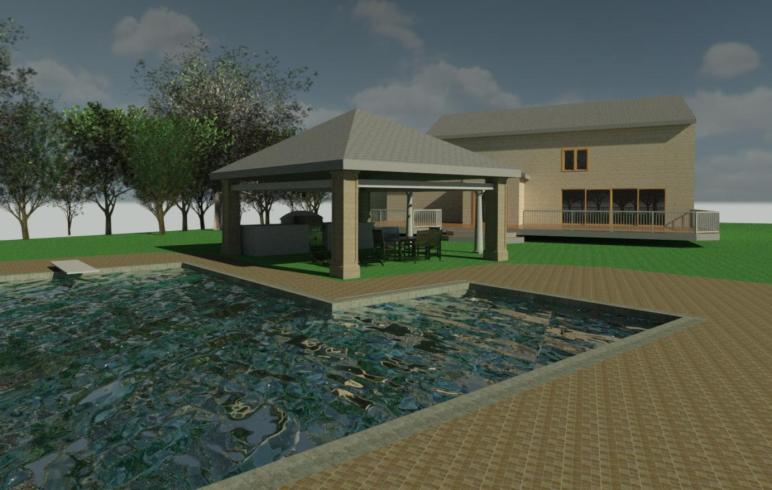
Mendez Residence


We have found our way back to the residential realm and have been enjoying every minute.  Years ago first starting out I just didn’t know how to communicate with homeowners in a way that could provide a meaningful design that we could both be happy with.  Thankfully after years of experience and slowly re-entering the residential field and with the help of some very good clients I am able to embrace this process again with a better level of confidence and tools so I can best help my client fulfill there needs to expand, modify or just an upgrade.

When Walls Can Talk

One of my favorite experiences is the opportunity to walk through an abandoned space, particularly a home that was once occupied but left in tact (or somewhat in the case of squatters). It often offers a rich context in which and how someone once lived in this space and without the benefit of a narrator, it leaves me with the task of imagining the lives of the previous inhabitants.  The stories that unfold are probably a lot richer than the reality, however it is not just a place for the physical to occupy but a place for my imagination to construct a culture and relationships that may or may or not have occurred.

A few miss matched dishes carelessly tossed in the sink with plastic flatware and drips down the counter with invoke an image of a frazzled single mother cajoling her small children to comply with the necessity of a quick meal and the focus to move swiftly to navigate within a constrained timeline.  Newspapers stuffed under a radiator and a t-shirt fused to the configuration of the top of that spiny radiator conjures up a image of a spontaneous spill and a quick change


Architorture

cropped-columbia-terrace1Community Effort

The value of a community is often self evident when driving through it, but the question is who sets the standards, how are they decided and do the actual residences have a say in the ordinances that are imposed, very often for both the benefit and detriment of the resident.  Community leaders are in the forefront for the decisions that are processed through the Town Boards and always a work in progress. It’s imperative to have some kind of framework in place, otherwise you (the homeowner) would be at the mercy of any whim your neighbor might choose to express permanent or otherwise.

We move into a neighborhood for a specific reason weather its school district reputation, crime percentages (or lack there of) or just because of the architecture, but its not uncommon to forget those reasons when the homeowner wants to make a few changes to suite their needs that are not congruent to the local municipalities.  Terms like “unfair” and “ridiculous” are often tossed into the arena with an acknowledgement of the taxes that are being paid implying that should garner a place in the decision making process.  Its usually at this point I ask the homeowner to reflect on their own reasons why they moved to the neighborhood and for a moment imagine if their neighbor had their say in whatever they wanted to do in spite of of their own objection, it only takes a minute for clarity to present itself.